4 of us climbed Baker via Coleman Glacier on May 22. It was a straightforward climb overall.
Baker is generally known as a beginner glacier climb due to its low technical difficulty. Usually safety concerns are around glacier crevasses. In early season though, the crevasse was minimum so it’s really a prime season.
Time: We really took our time during this climb.
- departed at 1am
- summited at 10am
- back at car at 4pm
Note: the Heliotrope trailhead was blocked by snow. We parked at .5 mi away from TH, and some cars were able to make it further, which probably placed them at .3 mi.
Stats:
(Per my GPS watch) 12.56 mi, 7874ft
Gears:
- regular glacier travel: ax, helmet, crampons,
- crevasse rescue: pulley, prussik, picket, rope
Note: snowshoes were unnecessary as snow was generally packed.
Gpx (<– link)
We arrived Baker at around 8:30pm the previous day. As mentioned before, the road was blocked by snow. Having tried to drive over and almost got stuck, and seen another car getting stuck in front of me, I stopped short and parked at the road side. There were already a dozen cars there. We got ready for sleep and dozed off. It was a bit cold without sleeping bag, but I managed to get around 40 minutes of sleep in my car.
The alarm broke off at 12:30am. After quickly gulped down some bakery and snacks and putting on clothes (mainly the mountaineering boots), I was ready to head up. We departed at 1am sharp. After walking for .5 mi we reached the Heliotrope trail head. There’s a sign to the left of the road that marked it. It should also be visible from all the bootpack.
Following the well-beaten bootpack was a no-brainer. The trail started in the forest. There were switchbacks here and there but the bootpack was really well marked so there shouldn’t be concern of getting lost. At night the snow was firm and a bit icy, but there wasn’t much need for crampons until you are up higher.
We put on our crampons at around 4500ft on an open slope. The slope gained more elevation, leading up to Hogsback camp at around 6K ft. That’s generally considered the boundary of the Coleman Glacier. There were a dozen or two tents at the camp. For best practice, we roped up with me in the front. Soon the sky lightened up and we turned off our headlights. Snow had been very consistent with a 10cm-15cm layer of sticky snow on the top and a hard layer of ice underneath. I believe the avy risk was minimum.
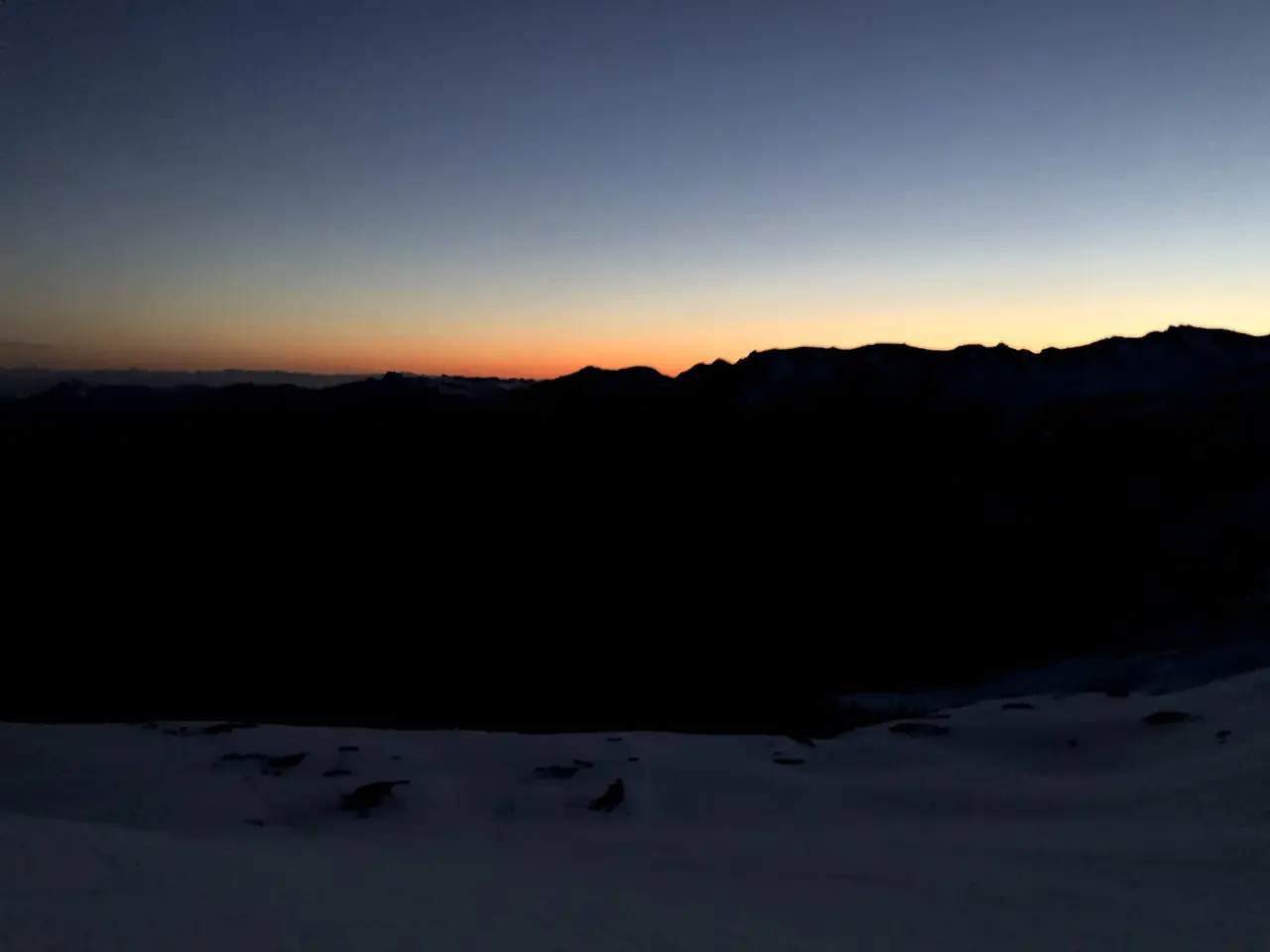
Sky lightening up
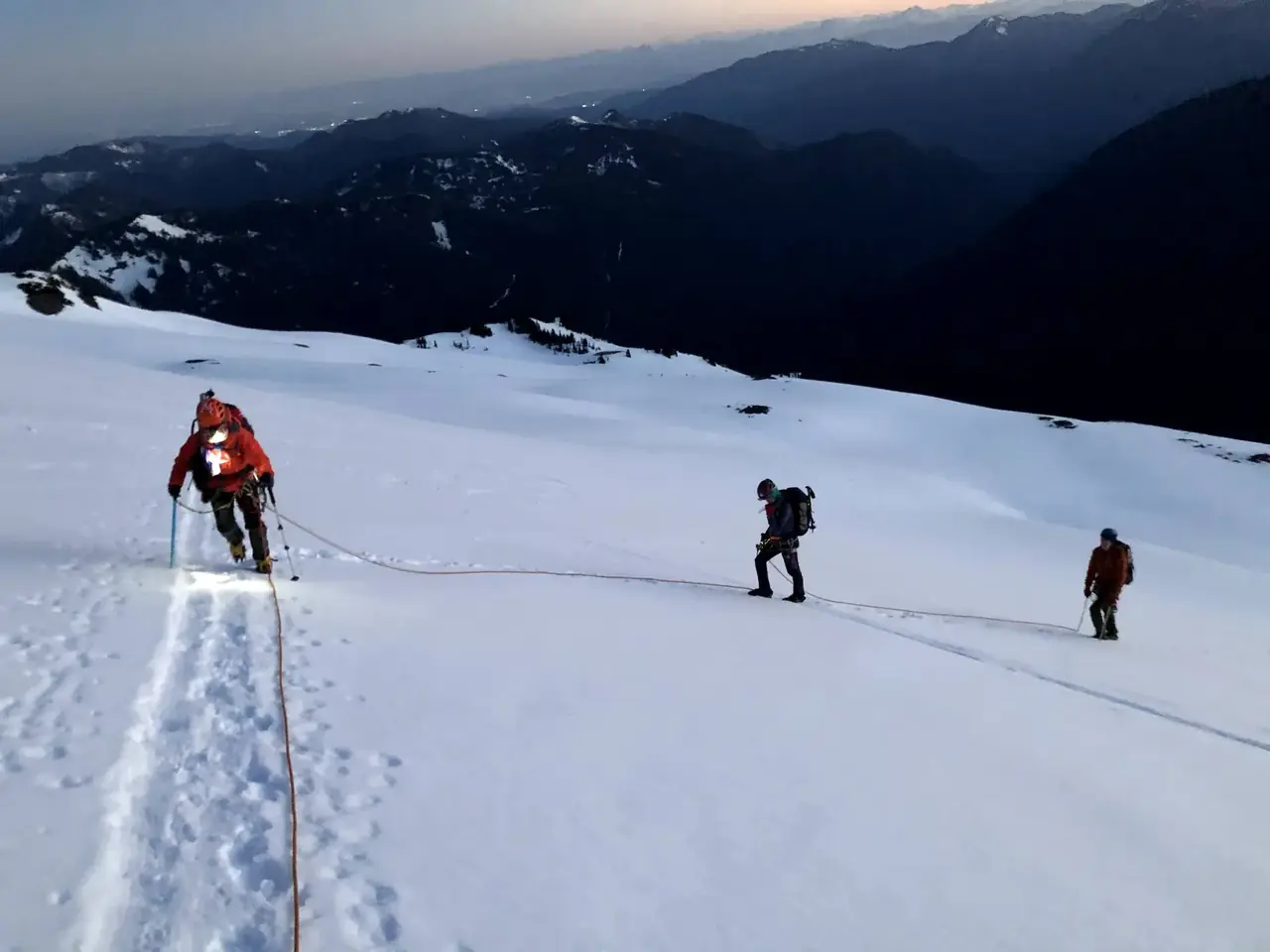
Heading up to Black Buttes camp
As we approached Black Buttes camp, the slope became mellower. With the sun wandering around the horizon, we finally saw the first few crevasses during the trip. They were far from the climbing route, posing limited risks to us. Black Buttes and Colfax Peak stood far away, while the false summit looked even farther.
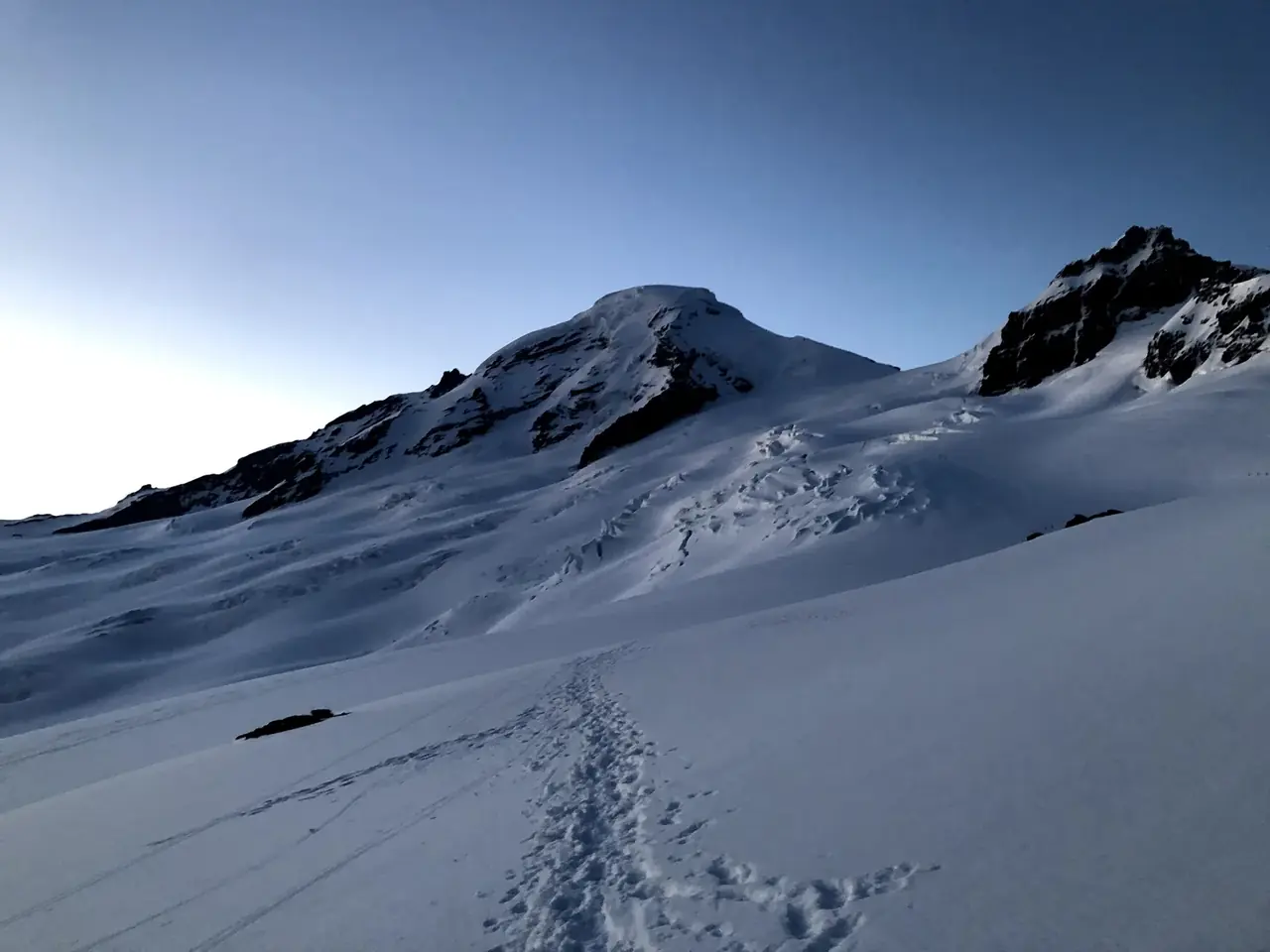
False summit in the front, Colfax Peak to the right


After taking short breaks every now and then, we finally reached the base of the ridge that led up Roman Wall. Wind gradually picked up, and was at its peak once we climbed up the ridge. There were two groups up on the ridge. One of them didn’t stop and directly pushed on towards Roman Wall, while the other group decided to turn around because there were a few inexperienced climbers who weren’t feeling comfortable with the condition. They set up a picket anchor for the noobs to rappel down the ridge first, while the more experienced climbers simply walked down the ridge. My team hid behind a boulder on the ridge to stay outside the wind to talk through the next steps. Everyone agreed that the wind was manageable and we should just keep pushing for the summit, so we put on more layers and went on.


The snow layer was denser and sometimes hardened ice thanks to the wind, but they weren’t too bad. If you follow the bootpack you should be fine. I got annoyed by the zigzags in the bootpack so I kicked steps to go straight up. The wind was consistently strong though not stronger, until we went up the false summit, where the wind really picked up.

The real summit was in the South East corner of the huge flat top. We walked there, took photos and quickly went down due to the strong wind. Heck, Mountain Forecast said the wind would be 5-10 MPH, whereas in reality it was probably around 30+ MPH. I tried to do the Michael Jackson moonwalk by leaning towards the wind, and it almost succeeded!


Heading back was uneventful. Going down Roman Wall could be mostly done via plunge stepping, just that I occasionally needed to be cautious of the hard icy sections. Once we were down Roman wall, the wind died down and the weather was all toasty. Since the snow coverage was luxurious, we were able to make short cuts every now and then without worry too much about crevasses (see my GPX). On the last slope down to Hogsback camp though, there was a hidden crevasse that couldn’t be seen from uphill. After going back into the forest, we were treated with shades, but needed to worry about punching through the Spring snow. Fortunately snow was still firm and I didn’t have one single punch through.
That was it! This is one of my favorite glacier climb due to its simplicity. If you plan to climb it though, make sure you get necessary training first (glacier travel and crevasse rescue). Good luck!
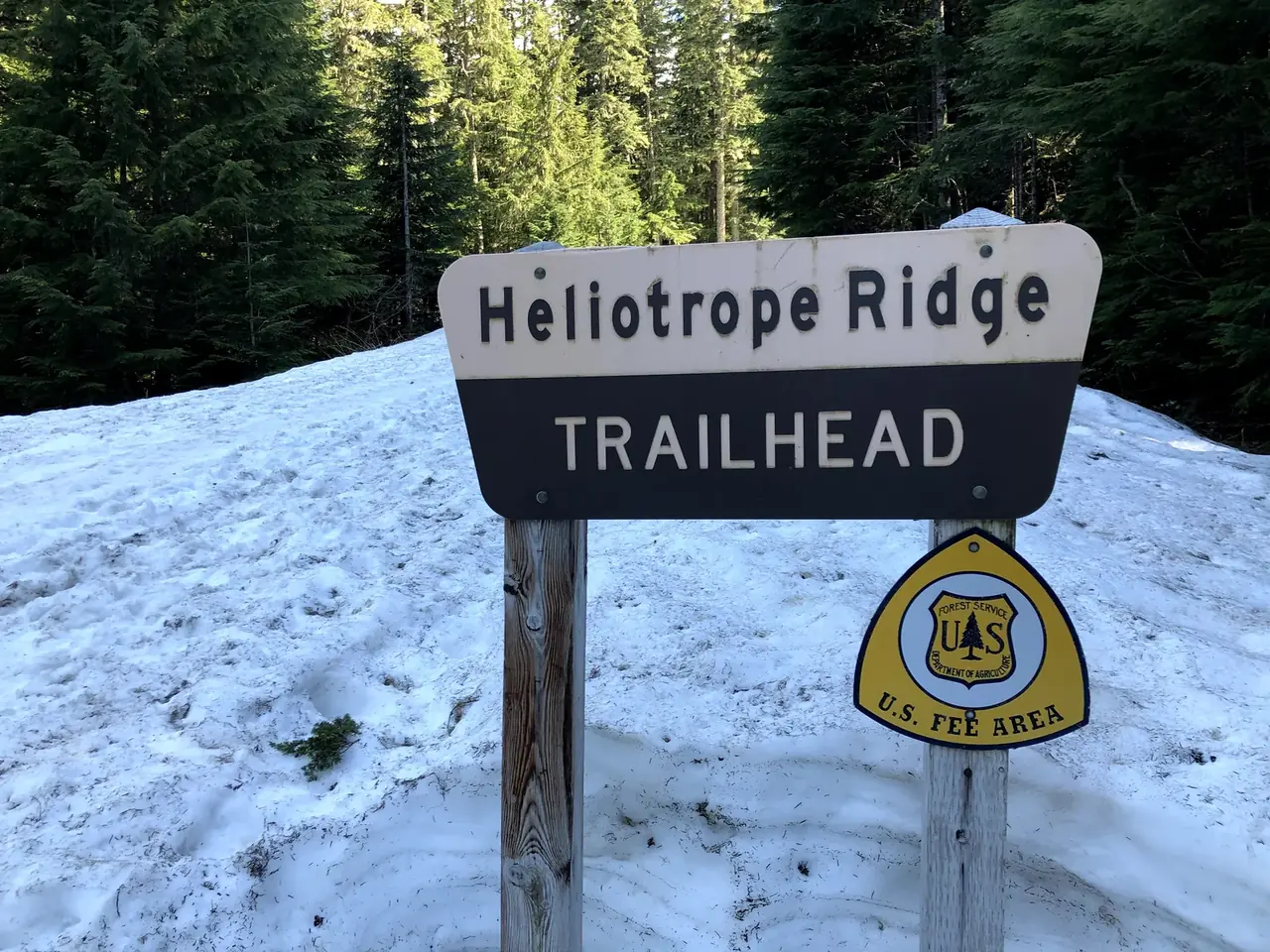
Back at the trailhead